




Backpacking Meals
Peak Refuel makes freeze dried backpacking meals for hikers who count every ounce and every calorie on the trail. Meat options are built on 100% USDA inspected meat with no TVP or fillers and all pouches contain real non GMO ingredients, from Homestyle Chicken & Rice to the vegetarian Three Bean Chili Mac. All Peak Refuel meals are freeze dried and packaged in the USA, rehydrate in about 10 minutes or less, and use less water to prepare than many competing brands. Browse the full Peak Refuel meal lineup below to find the freeze dried backpacking meals that fit your next trip, then read on for guidance on weight, calories, and meal planning for multi-day treks.


Venison Country Casserole

Loading...
Finding the Right Backpacking Meal for Your Trip
Choosing among freeze dried backpacking meals comes down to three factors that matter most when you are carrying everything on your back: pack weight, calories per ounce, and how much water you can spare to cook with.
Weight and Calorie-to-Weight Ratio
Peak Refuel's heaviest meal weighs 6.35 ounces, with most entrees and breakfast pouches weighing less. Because freeze drying removes nearly all of the water from a meal before packaging, these backpacking meals carry far more calories per ounce than fresh or canned food, which is the main reason backpackers choose them over cooking from scratch on multi-day trips. Most pouches hold two servings and run anywhere from roughly 500 calories for lighter breakfast and dessert options up to more than 1000 calories for the heartiest dinner entrees, so a hiker planning daily intake can mix and match pouches to hit a calorie target without adding significant pack weight. A pack stocked with two or three Peak Refuel pouches per day, paired with trail snacks, typically lands well within the calorie range most multi-day backpackers plan for, all while adding only a few ounces over a base layer of gear.
Protein and Macros That Matter on the Trail
Every Peak Refuel entree except our vegan options is built around 100% USDA inspected meat, and many dinner pouches deliver 30 to 40 grams of protein or more per pouch to support muscle recovery on long days of hiking. Reviewers who have compared sodium levels across brands have also noted that Peak Refuel tends to run lower in sodium than some competing freeze dried meals, which matters when water is limited and over-salted food can increase thirst. For backpackers tracking macros on extended trips, pairing a high-protein dinner pouch with a granola or oats-based breakfast pouch is a simple way to balance protein intake with the carbohydrates needed to fuel long climbing days.
Building a Multi-Day Meal Plan
Putting together the best meal plan for a multi-day trip means rotating breakfasts, dinners, and the occasional dessert so you are not eating the same flavor twice in one trip, while also deciding how much food to carry versus cache or resupply along the way.
Mixing Breakfasts, Entrees, and Desserts
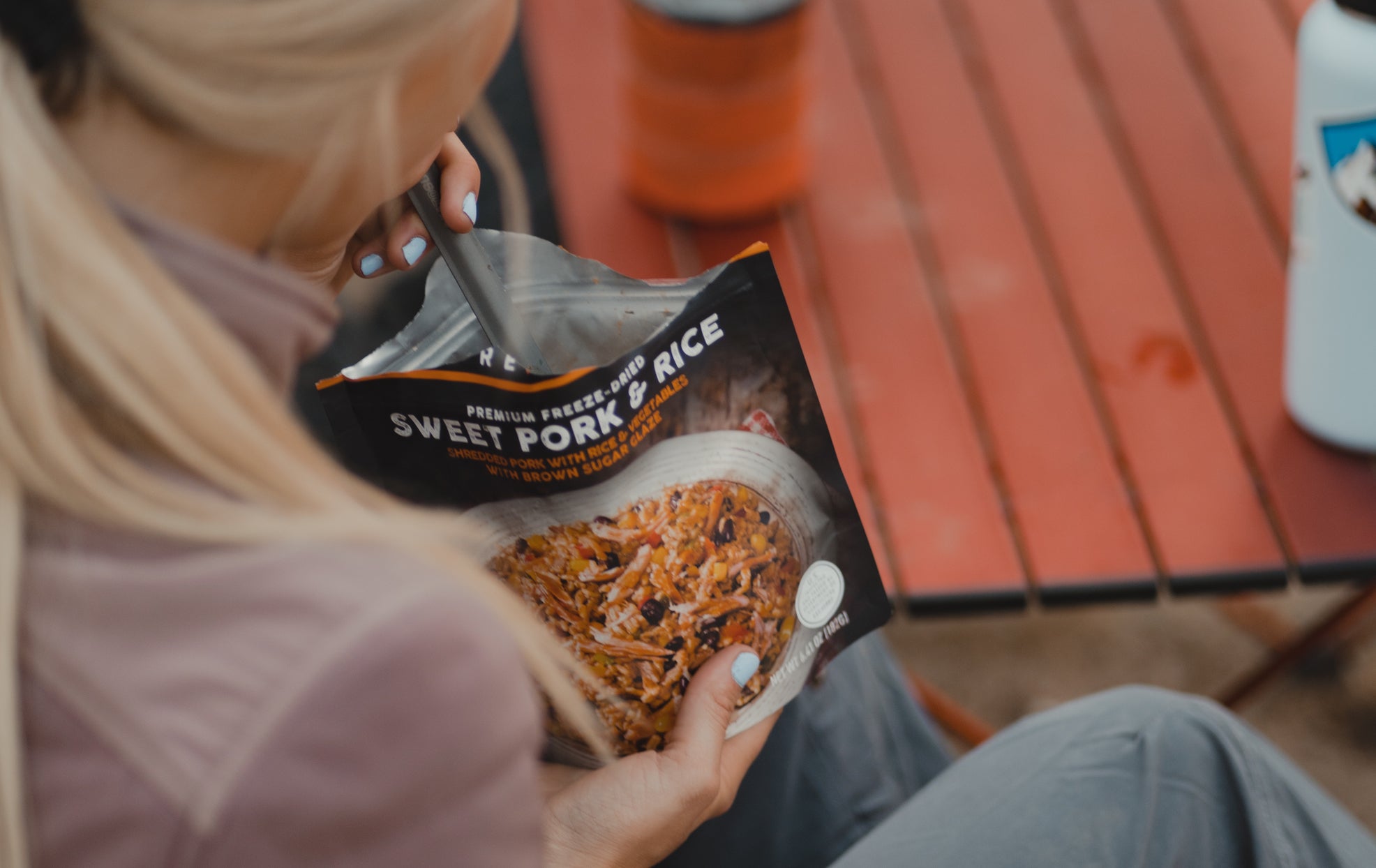
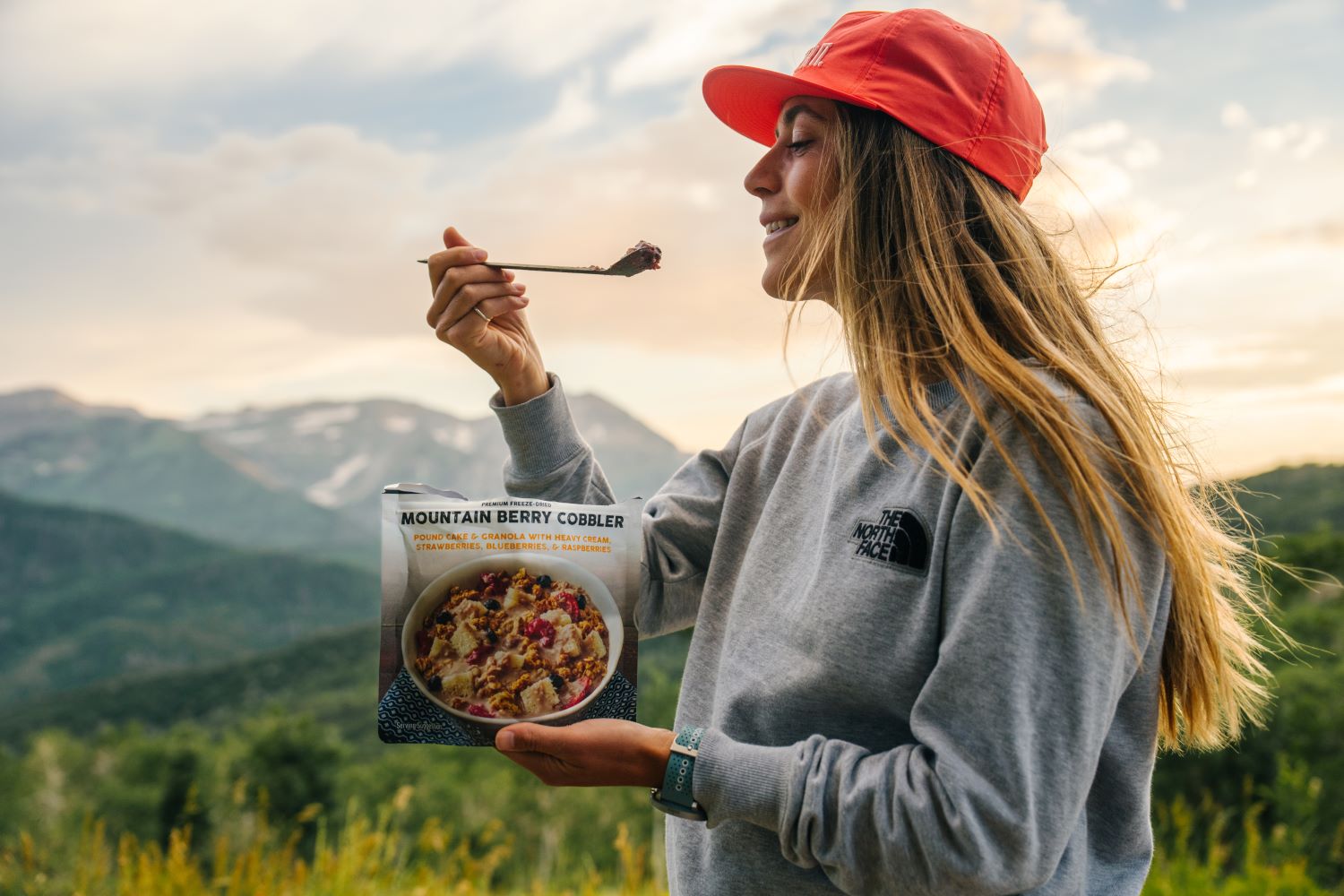
Pair a breakfast pouch like Mountain Berry Granola or Biscuits & Sausage Gravy with a dinner entree such as Chicken Alfredo or Sweet Pork & Rice, and save a dessert pouch for the end of a hard climbing day to boost morale and calories. Hikers managing dietary restrictions have options too: Three Bean Chili Mac, Mountain Berry Granola, and Butternut Dal Bhat are vegetarian, and several recipes, including Sweet Pork & Rice and the Breakfast Skillet, are formulated without gluten ingredients. Peak Refuel meals are not independently certified gluten-free and are produced in a facility that also processes gluten.
Stocking Up for Longer Trips
For trips longer than a few days, pre-built meal packs bundle breakfast and dinner pouches together so you are not ordering each flavor one at a time. Hikers stocking a resupply box, a base camp cache, or food for an extended trek can also look at the bulk bucket options, since Peak Refuel pouches carry a 10-year shelf life and store well between trips.
Planning Your Pouch Count and Resupply Points
A common starting point is one breakfast pouch and one dinner pouch per person per day, with a dessert pouch added every two or three days for extra morale and calories on tough sections. On a week-long trek with a single resupply point, splitting pouches evenly between the two halves of the trip and labeling each day's bag ahead of time keeps packing simple and avoids digging through a full week of food at camp each night. Because every pouch ships with a printed best-by date, it is easy to rotate older stock from a pantry or bucket into a shorter trip and save fresher pouches for a longer expedition later in the season.
Peak Refuel Compared to Other Backpacking Meal Brands
Backpackers weighing Peak Refuel against competing brands are usually comparing the same three things: calories, protein, and how much the food actually tastes like a home-cooked meal.
Calories and Protein vs. The Competition
Peak Refuel positions its meals around higher protein and calorie counts per pouch than many traditional freeze dried brands, with dinner entrees built to clear 30 to 40 grams of protein. Some brands lean toward vegetarian and pasta-forward dishes that typically run lower in protein, while other popular brands offer a broader menu of classic camping flavors. Reviewers who have tested multiple brands and ours side by side generally note that Peak Refuel's meat-forward recipes and lower sodium content set it apart from both.
Ingredient Quality and Real Meat
Peak Refuel never uses textured vegetable protein or other meat fillers, and all meat options are made with 100% USDA inspected meat sourced from suppliers that go through a screening process before being approved. Ingredients are non-GMO, and every pouch is freeze dried and packaged in the USA rather than overseas, which is a point of differentiation buyers frequently cite when comparing brands on the trail.
Backpacking Meals FAQs
What Peak Refuel meals are best for backpacking?
Homestyle Chicken & Rice, Chicken Alfredo, and Sweet Pork & Rice are among the most popular Peak Refuel entrees for backpacking because they combine high protein with a quick rehydration time. Three Bean Chili Mac is the top pick for vegetarian backpackers. For breakfast, Mountain Berry Granola and Biscuits & Sausage Gravy are common trail favorites. Since every pouch holds two servings, solo hikers often split a pouch across two meals or share with a partner.
How light are the meals and what is the calorie-to-weight ratio?
Peak Refuel's heaviest meal weighs 6.35 ounces, with breakfast and dessert pouches weighing even less. Because the meals are freeze dried, nearly all of the water content is removed before packaging, so the calorie-to-weight ratio is far higher than fresh food. Most pouches deliver between 500 and over 1000 calories across two servings, giving backpackers a way to hit daily calorie targets without adding meaningful pack weight.
How do you prepare meals on the trail with limited water?
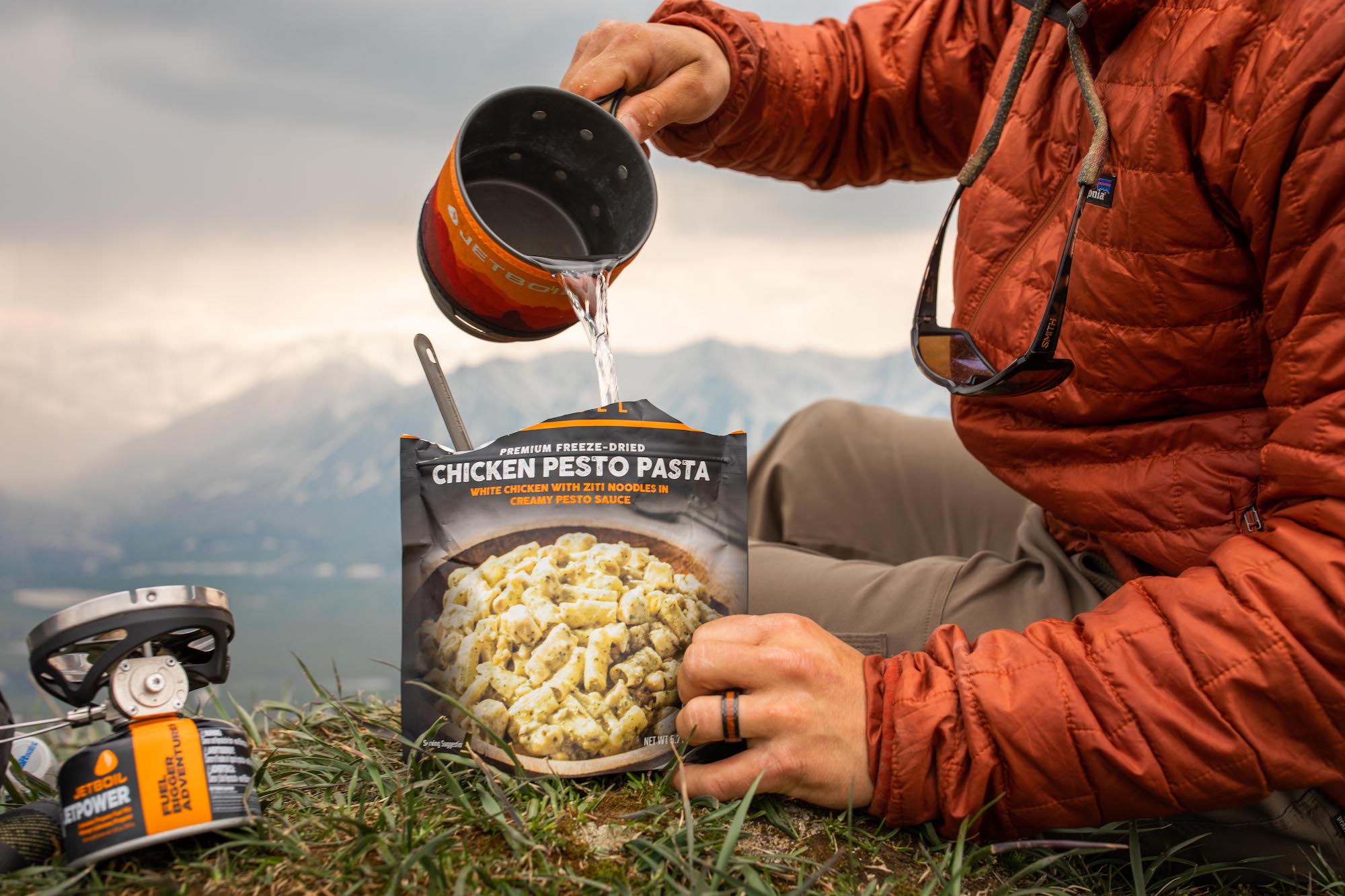
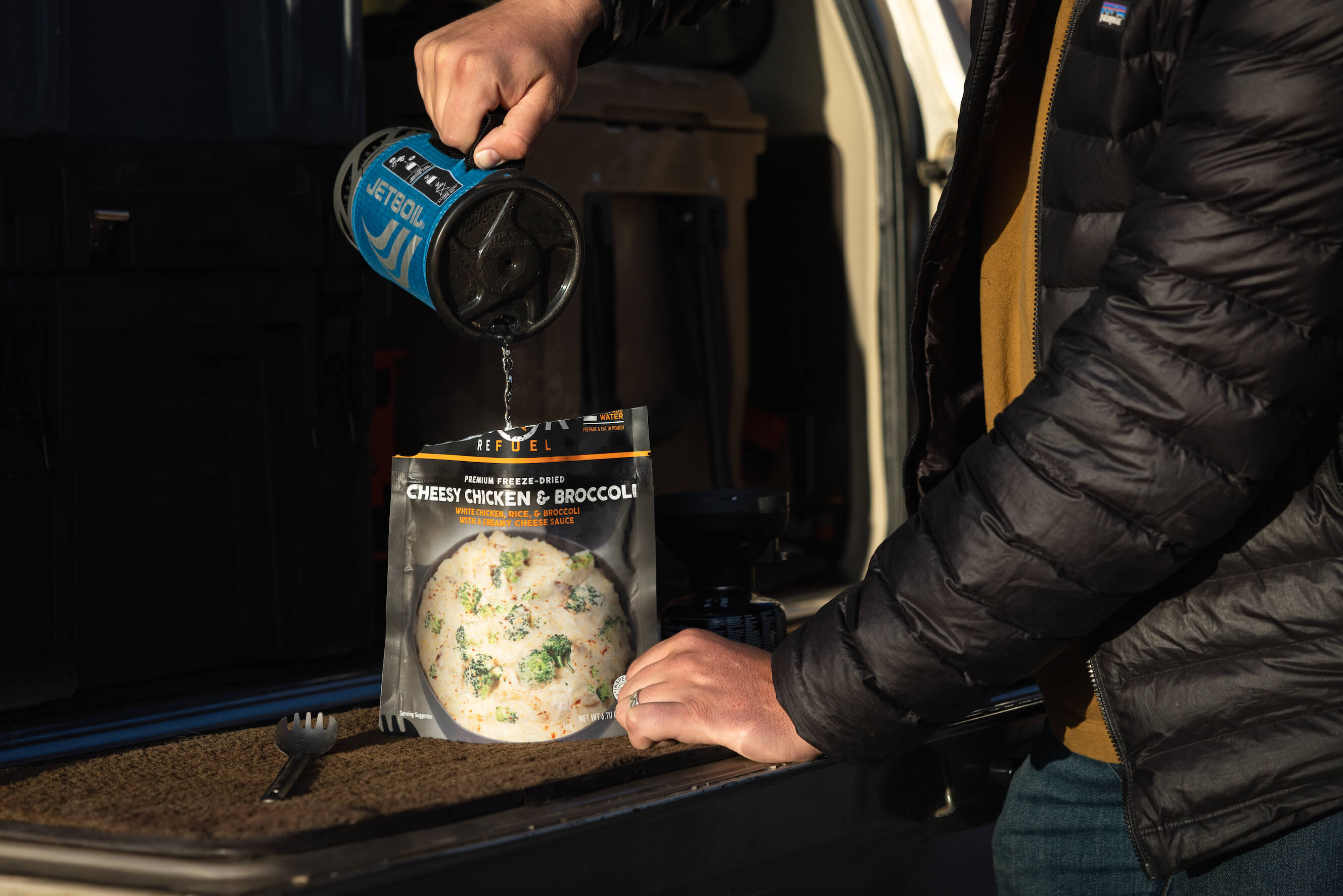
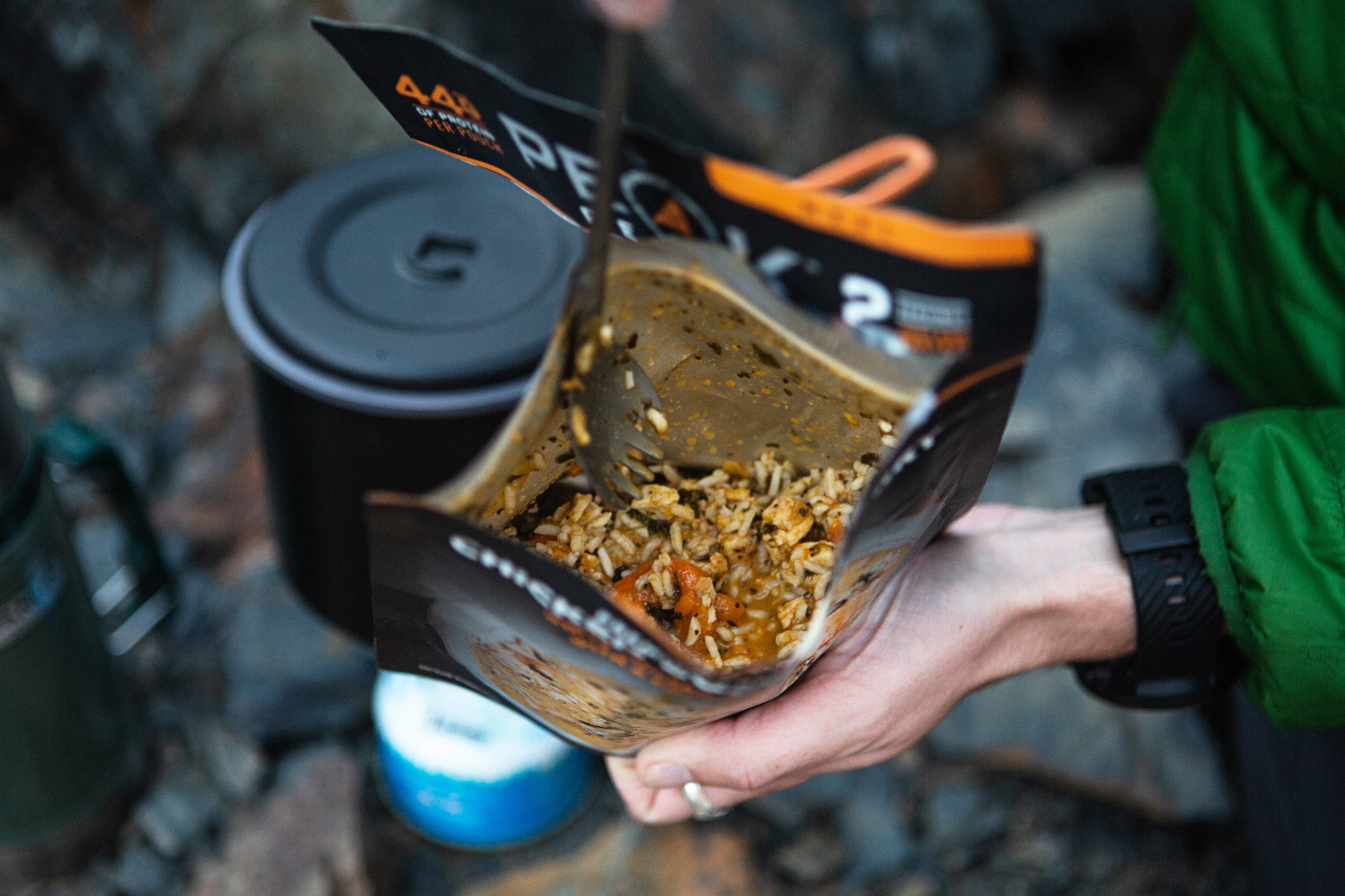
Boil water, pour it directly into the pouch up to the fill line, reseal, and let it sit for about 10 minutes before eating straight from the bag. Most Peak Refuel meals need roughly 9 to 10 ounces of hot water to rehydrate fully, which is less than many competing brands require, leaving more water in your bottle for drinking. No extra pot or dish is needed since the pouch doubles as the cooking and eating container.
What is the best meal plan for a multi-day trip?
Plan one breakfast and one dinner pouch per day at minimum, then add a dessert pouch or a second entree on harder days to cover extra calories burned on long climbs. Rotating flavors across Peak Refuel's lineup, rather than packing six of the same pouch, helps avoid flavor fatigue on longer trips. For trips over a week, a pre-built meal pack or bulk bucket simplifies packing by bundling breakfasts and dinners together.